Friday, March 24, 2017

The Three Books of March

"Reading is the sole means by which we slip, involuntarily, often helplessly, into another's skin, another's voice, another's soul."

 -Joyce Carol Oates, author of We Were the Mulvaneys and 40 other novels, quoted from flavorwire.com

#######################################################

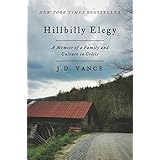
It's been an active month of reading for me, and I enjoyed every minute of it. I read Hillbilly Elegy, A Man Called Ove, and The Life We Bury. I discussed Hillbilly Elegy in my last post, and I am still savoring this true story about a man who was born in Jackson, Kentucky and spent most of his youth in and around Middletown, Ohio. He writes about what it was like to grow up in an extremely dysfunctional family and to get past those experiences to graduate from law school in an ivy league university. The reading of this book led me to find a book that a Tennessee friend recommended, White Trash. The 400-Year Untold History of Class in America. This book isn't "easy reading," but it's very interesting so I'll write about it when I finish it (that won't be anytime soon!).

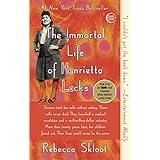
Before I start writing about the other two books that I read in the past month I want to let you know something interesting. I wasn't aware of this news, but this week I found out that The Immortal Life of Henrietta Laks is being made into a movie and will be released sometime next month. I was mesmerized by this story when I read it a few years ago, as I've mentioned in my posts in the past. This movie stars Renee Goldsberry, Oprah Winfrey, Courtney B. Vance, and others. Apparently it's going to premiere as an HBO movie on April 22, 2017, so look for it. I'm not sure how I'm going to watch it since we don't have HBO, but I'll search diligently for a way to be able to see it. 

A Man Called Ove by Fredrik Backman is a book that kept popping up on my Amazon searches so I thought, why not? Backman also wrote a book that I discussed earlier, Major Pettigrew's Last Stand. It's a newer book so it's probably hard to get at the library, but I discovered something new: they now have copies of recent books in a special location in the library, but readers can only keep them for one week. So I read non-stop and finished the book in three days. These books that are only for one week are labeled with a yellow band on the side as well as a yellow note on the front. I'm so glad the library added this section for speedy readers and people who are just dying to read a newer book and don't want to wait until a copy becomes available.


 This book centers on the life of a man named Ove, 
a depressed 59-year-old widower who is planning to end his own life.  
He is probably the crankiest person you've ever "met," and he finds something to complain about all the time. Nothing is good enough for Ove. He complains about the neighbors and acts as a sort of "neighborhood policeman." Since his wife died, Ove has not been able to enjoy anything in his life so he plans various ways to end it,  but things don't work out, mostly due to the interference of neighbors. In the end, it's the people in his neighborhood who help him see what's really important in life. I don't want to spoil it for you so I won't go into too much detail, but it's basically a character study of a man who asks critical questions that we might be able to relate to. These are questions that many of us have asked ourselves in the past.

The other book that I read recently is The Life We Bury by Allen Eskens. It's about a college student, Joe Talbert, who comes from a bad home experience but manages to stay in college while his mother and autistic brother live in a nearby town. Because of his mom's alcoholism and bad relationships, Joe must be the leader in the family and takes steps to protect his brother from a dangerous home situation. While working on an assignment for his English class, Joe discovers Carl Iverson in a nursing home and decides to write his assignment about him. Joe learns a lot from Carl, and the two become fast friends. But why is Carl in a nursing home? And why does Joe become so wrapped up in his writing assignment? There is a lot of danger and mystery in this book, so if you enjoy that type of thing you will like this one. One thing I thought about as I read his book is that I don't think a young college student would behave in the way that Joe does. I really think Joe is characterized as maybe a 30-year old at least. The way he talks, his relationships, how he communicates, etc. are unbelievable for me. I just don't think a young man his age would behave in the way that Joe does. That's just my opinion. I read that the book has won several awards as a new novel or "best debut novel," so readers are enjoying it. I wouldn't say that the two books I've discussed today are "great novels" in the realm of The Poisonwood Bible, Cutting for Stone, Huckleberry Finn, Uncle Tom's Cabin, or Edgar Sawtelle, but they are both good reads and have a lot to say about life. I could see them being good books to discuss in your reading group. 

So, what is a good novel, anyway?

Well, it has a long, epic story with intricate characters who deal with many different kinds of issues. It has to be interesting to people. It has to "catch you" on the first page. It has to have appropriate and beautiful language that makes the reader want to go on to the next page. Lots of twists and turns help to take the story on and on, but it also has to know when to quit. It must also have a memorable plot. I tend to read a lot of non-fiction because I love to learn, but I also learn from novels that are well-written. Fiction and non-fiction must reel me in so that when I'm finished I can say it was worth my time and energy.

What are your thoughts? Feel free to leave a note below. Have a wonderful weekend....

Melissa Hill
Book Blogger
www.onegoodbookblog.blogspot.com

My parents gave me this fun mug for Christmas.Look closely as the titles appear.


Thursday, March 9, 2017

A Hillbilly, War, and More


 Product Details

"...Why didn't our neighbor leave that abusive man? Why did she spend her money on drugs? Why couldn't she see that her behavior was destroying her daughter? Why were all of these things happening not just to our neighbor but to my mom? It would be years before I learned that no single book, or expert, or field could fully explain the problems of hillbillies in modern America. Our elegy is a sociological one, yes, but it is also about psychology and community and culture and faith."

-J.D. Vance, author of Hillbilly Elegy: A Memoir of a Family and Culture in Crisis (p.144) 

 ***********************************************************************************

 This morning I'm sitting here in the beautiful North Durham Library near my house. This side of the building has a wall of windows that allows us to look out at the sunshine and daffodils in their early bloom, just before cold weather returns this weekend. I've always loved libraries and I come here often. My first memory of a library is when we lived in Louisville, Kentucky. I was about 8 years old and loved getting "free" books to read and enjoy. I continued the trend with our own children as they grew up, and they both enjoy reading to this day. There is something about the smell of books that is unequaled anywhere. You probably know the feeling. 

I had a nice surprise when I arrived here this morning. They have a long display of newer hardback books that we can check out for just one week. Yesterday I requested some books online, some of which I had to put on hold, but I found one of them here so I checked it out for just one week. So, I need to read A Man Called Ove very quickly, and then I'll get A Gentleman in Moscow. I read books pretty quickly anyway, so I'm not too worried about trying to read a book in one week. I'm pretty excited about this new program that the library is using.

A few days ago I finished reading J.D. Vance's book published in 2016, Hillbilly Elegy.  He spent most of his early life in Middletown, Ohio, a town just about halfway between Dayton and Cincinnati. His grandparents were from Jackson, Kentucky, a small town in Eastern Kentucky where lower-class whites often had a very hard time making a living. Many of the people were, of course, coal miners, and they had little hope of doing much else with their lives. Vance's grandparents, people he calls "Mamaw and Papaw," left Jackson when they were teenagers. They heard there were good jobs up in Middletown, so they left home for the first time in the hopes of a better life. Mamaw was just 14 years old, and Papaw was 17, and they were expecting a baby. The company job in Middletown gav Papaw more opportunities so they were able to live a middle class lifestyle, own a home, and pay their bills. But their lives were so chaotic due to alcoholism, drug addiction, divorce, and more. Vance always thought of his grandparents as his primary guardians because his own mother wasn't really able to take care of him as she went in and out of prison, had several husbands, etc. Vance analyzes his life now that he is an adult, but he can't solve the problem that has plagued generations of hillbillies. He wonders how to stop the madness, as the quote above indicates, and yet he loved his family members very much. He was very close to Mamaw, even though she could cuss a sailor or pull a gun on somebody, because he knew that she loved him and wanted the best for him. He and Mamaw used to love to watch the movie "Terminator 2" together, and Mamaw say Schwarzenegger as the embodiment of the American Dream. She liked seeing an immigrant coming out on top, but Vance saw the movie more as a metaphor for his own life. He thought of Mamaw as his protector, keeper, and terminator, and she wouldn't let anyone harm him. With Mamaw, he knew he would be ok. After reading this warm hearted book, I can see why it's so popular. Today Vance and his wife are lawyers, and they definitely live the American Dream.

Another book that I finished this week is War and Turpentine by Stefan Hertmans. This historical novel was so good that I didn't want to put it down. It is translated from the Dutch and is dedicated to the author's father. The narrative is told from the perspective of the grandson, a man who found two notebooks that were kept by his grandfather, Urbain Martien, and he strives to understand the information that he learns. His grandfather was both an artist and a survivor of the atrocities of World War I.  Martien grew up watching his poor, lowly father paint in churches, and he would often retouch his father's work. The speaker wants to understand his grandfather so that he can accept some things about himself as well. This book is so beautifully written and is worthy of being called a great novel. I encourage you to read it or something else written by Hertmans, an internationally acclaimed Flemish author.

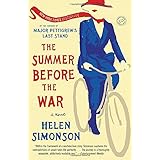
I listened to a couple of books on CD in the past few weeks. I listened to a book set in England, The Summer Before the War by Helen Simonson, and Sundays at Tiffany's by James Patterson. I've read another book by Simonson as well, Major Pettigrew's Last Stand. The Summer Before the War is sort of a "Downton Abbey" type of a book, and the "class" of a person is as important as anything else. I enjoyed both of her books and found them to be fairly relaxing stories. Patterson's book set in New York is about a girl and her imaginary friend, Michael. She is a lonely only child, and she longs to feel loved so she turns to someone no one else can see for comfort. On her 9th birthday, Michael has to disappear, but she later encounters him again when she is an adult. It's a fun, easy book to listen to (only 5 CDs) so if you want some light reading, it's a pretty good one. 

Well, there's so much to read and so little time, so I'll read A Man Called Ove and my Great Britain tour book in the coming week. I'm "reading up" on England and Ireland in preparation for a summer trip. Let me know what you're reading. Or, you can let me know what you'd like to read.

-Melissa Hill
Book Blogger
www.ongoodbookblog.blogspot.com 

 Product DetailsProduct DetailsProduct Details

Friday, February 17, 2017

The Light Between Oceans and Other Great Reads

"Let us remember: One book, one pen, one child, and one teacher can change the world."


-Malala Yousafzai, author of I Am Malala 
(as quoted in Brainy Quotes)
_____________________________________________________

I'm happy today that I have the time and energy to write another post on this beautiful, sunny, Carolina morning. I haven't written for a few weeks simply because life happened and it's been hard to concentrate on my favorite hobby, reading great books. My husband had open heart surgery on December 19, 2016 and he's doing well now, but it sort of kept me from my normal routines. Additionally, I must admit that at times basketball season has interfered with my reading time, but when I go to a game I almost always take a book to read during the timeouts and half-time. This year I have season tickets to the Duke women's home basketball games, and I've spent a good deal of time enjoying basketball at Cameron Indoor Stadium here in Durham. This Sunday is my last home game, but I hope to see the games that are televised in both the ACC and NCAA tournaments. I also follow the Duke and Kentucky men, so it's a busy time. That being said, I have several books to share with you that I have read recently.


Product Details

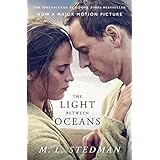
Next week my book club will discuss a good book, The Light Between Oceans by M.L. Stedman. I read this book a few weeks ago and found that it was very easy reading. It was different than what I usually read, but I enjoyed it as a change of pace. The book is set in Australia with the main character, Tom Sherbourne, living on an tiny island in Western Australia while he works as a lighthouse keeper on Janus Rock. He marries Isabel, a young woman who grows to love the island as much as Tom does. They have a wonderful time together as the only residents of the island, and they decide to start a family. Unfortunately for them, they are unable to conceive a healthy baby, and after several losses, they suddenly become the guardians of a baby that has washed up on shore in a rowboat. Inside the boat there is also the body of a man who has died at sea, and although they can't imagine who he might be, they bury him on the island and decide to raise the baby as their own. 

When the child is two years old, Tom and Isabel return to the mainland where they visit with family and friends once again. Tom is faced with a moral dilemma regarding the child. Isabel was so determined to raise Lucy as her own that she would do almost anything to keep her. Tom wonders who the birth mother is, and he struggles inwardly with the question of whether they have done the right thing. He, too, loves Lucy desperately, but he is a man of honor and knows more than he really wants to about the birth mother. You need to read this book to find out what happened in the end, and you will find out what Tom and Isabel did with the child that came to them as if she was a gift directly from God.

Product Details

I'm listening to a book from the library while I'm driving around. I'm enjoying it so far and it reminds me of the episodes of "Downton Abbey" that I enjoyed last year. I'm listening to The Summer Before the War: A Novel by Helen Simonson. The book is set in the English countryside, and it seems like all of the characters are more interested in their "honor" and "standing in the community" than they are about doing anything of relevance. They have plenty of time to sit around and drink tea, and while they do so they, of course, discuss who is doing what, how so-and-so looks, and other tidbits of rumor. I read that this book is a follow-up to Simonson's earlier book, Major Pettigrew's Last Stand, another book that I commented on in an earlier post. Both of these books are fun to read if you enjoy stories about British people who speak a little more "gracefully" than most of us do.

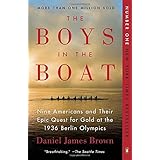
In the near future my book club is going to read Hillbilly Elegy, The Immortal Life of Henrietta Lacks, and The Boys in the Boat. While I've already read the two latter books, I look forward to skimming them so that I'll be prepared for the discussion at the library. I have a copy of Hillbilly Elegy and hope to start it soon, but in the meantime I'm reading a book that I got for Christmas, War & Turpentine, by Stefan Hertmans. Hertmans is a very good writer, so I'm enjoying this book and look forward to working through it to the end.

What have you read lately? Have you read any of the books that I've discussed today? Your thoughts are eagerly anticipated so please leave your comments. It seems lately that I've more information online than I have actual words on a page, but I usually have two books that I'm working on. I've been reading a lot online to prepare for a trip to England and Ireland this summer, and this is part of the fun of traveling. I enjoy learning everything I can before I go somewhere so that I can get the most out of the trip as possible. While we've been to England and Scotland before, Ireland is new to us so we're very excited about this opportunity. We'll be on a five-day tour throughout Ireland, and then we will head back to London for a few days. We get to be with our young adult children during this time.  

Have a fantastic weekend, and I look forward to hearing from you. Read on.

Melissa Hill
Book Blogger
www.onegoodbookblog.blogspot.com 


Product DetailsProduct DetailsProduct Details

Tuesday, January 10, 2017

A Hidden Gem from a Kentucky Author

"I was born to dig coal," Father said. "Somewheres they's a mine working. Fires still burning the world over, and they got to be fed. All the hearthstones in North Americkee hain't gone cold. I been hearing of a new mine farther than the head o'Kentucky River, on yon side Pound Gap. Grundy, its name is."


-Father in River of Earth, by Kentucky author, James Still, 1940


Product Details
*********************************************************************************


I read a good little book this week about an Appalachian family who struggled for every little piece of food that they got. The narrator of River of Earth by Still is one of the children, a boy who was often hungry and cold along with the rest of his family. James Still depicts the struggles of his own mountain people in Kentucky as if he knew exactly what they were going through. His poetic use of the mountain language of the day in the early 20th century is an art form in itself. Granted, it was difficult for me to understand at times, so I just reread the sentence until I got what the character was saying. 

I first heard of this book when I read Dimestore by Lee Smith last month.  Smith devotes a chapter to this writer. She was very impressed with his natural writing ability, and she was very happy to be able to get to know him. She grew up in Grundy, Virginia, a small town that Still mentions in the above quote from his book. River of Earth reminds me of books like The Grapes of Wrath where great human suffering affects droves of people who cannot seem to find a way out. Still depicts a family who lived on some farmland, but they rarely were successful in growing enough food for the family. On top of that, Father would often allow relatives to stay a while when they had nowhere else to go because they were kin. Of course, this took food from the mouths of the children, and it angered Mother to no end. Eventually, Father felt he had no choice but to work in the coal mines, so he moved the family to one of the company houses in Blackjack. The narrator vows that he will never become a coal miner because he plans to become a "horse doctor" one day, yet the people around him say that there is no way out once your family works in the mines. His own relatives told him this would be his fate, and their words burned in his ears: "'What'er you're aiming to be, you'll end snagging jackrock.' It throbbed in my head like truth, and however swiftly I ran, it sped with me." The book only covers about three years in the life of this family, so I don't know if the boy ever became a veterinarian. But the ending doesn't lead the reader to believe that he will reach his dreams. 

Today I counted the number of books that I read in 2016, and I found that I read 24 of them. I seem to read from various genres so it's hard to pin me down on what kinds of books that I like. I read historical novels such as The Nightingale by Hannah and Thomas Jefferson Dreams of Sally Hemings by O'Connor. I also read some fun novels set in Paris such as A Paris Apartment by Gable, and Hidden in Paris by Gantz, I enjoyed some memoirs such as The French House by Don Wallace and The Magnolia Story by the Gaines'. I enjoyed all of these and look forward to discussing some great ones in the months ahead. Next on my list is a book that I got for Christmas, War & Turpentine by Stefan Hertmans. It was on the NY Times best 10 books of the year list in 2016, so it's going to be a great ride. Have you read it? If you have, no spoilers please!

I appreciate the book list of one of my readers, and I will hang on to it for when I need a new book. Readers, please leave me your thoughts on what I've shared today - your opinions are truly appreciated.

-Melissa Hill
Book Blogger
www.onegoodbookblog.blogspot.com


Monday, January 2, 2017

A Reading List That Grows

"She'd become an English major for the purest and dullest of reasons: because she loved to read."

-Jeffrey Eugenides, The Marriage Plot
(goodreads)
 ***********************************************************************************

Well, we finished another year, a year that had some ups and down for all of us. The year 2016 is over and done with, and now is the time to think about what we are going to do in 2017. We may not want to change anything, and we may accept that there are many things that we just can't change. Many things are out of our control, and yet we still strive to be healthy and happy, somehow reaching for our dreams at the same time. Oh, and by the way, I was an English major too, and I received my secondary teacher's certificate as well. I guess I do enjoy languages and literature, because my minor was Spanish.

One dream I have is to write about my E.S.L. students and to figure out how to get published. I teach E.S.L. in a public elementary school, and I always hear funny and honest things come from the mouths of my First and Second graders. The first language of all of my kids is Spanish, and they are quite good at speaking English, but some of them struggle in the areas of comprehension and writing. But all learning aside, they always seem to have a lot of things on their minds. I would like to write these stories down and find a way to get them published so that other people can enjoy them.

My other dreams are to read more and travel more. I am a restless soul and I'm always on a quest to do something that I've never done before. No matter where I go, I can find some interesting things to do there. I remember a few years ago when we visited our son in Sandusky, Ohio. I researched what there is to do in the area, and a found a little gem that I'll never forget - we visited the birthplace of Thomas Edison in nearby Milan. It was so much fun to learn about Edison, tidbits of info that we had never read before. While in Sandusky we also visited one of the Lake Erie islands, Kelley's Island. We rented a golf cart and drove around the island. Wow - such a pretty little place for a quiet vacation, complete with beautiful homes and a nice beach. On the negative side, I don't remember seeing any hotels there, but I'm sure there must be some. Last summer I went to visit a friend in the Birmingham, Alabama area and we found some beautiful gems there as well. We visited the home of Helen Keller in Ivy Green, and then we visited the hometown of Harper Lee (Monroeville). There are no adequate words to express how much I enjoyed these two outings. Again, I'm always looking for something new to learn and experience, and these two places met all of my expectations and then some. Interestingly, my friend has lived in Alabama for many years, but she had never visited the Keller or Lee hometowns. I think she enjoyed the day trips almost as much as I did!

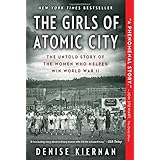
In December I did a good bit of reading. I finished The Girls of Atomic City: The Untold Story of the Women Who Helped Win World War II by Denise Kiernan. I wrote about the book last time, so I'll just summarize it now. I loved this book so much because I learned about something that happened in America that I had never heard of before, the making of the atomic bomb and the war attacks at Hiroshima and Nagasaki. The book discusses the science behind the project, but it also gives us a glimpse into the lives of young, ordinary women who left their families far behind to move to Tennessee to work. They had no idea what they were going to do, and the secret of their work was kept from them for a very long time. The young peopled were lured to Oak Ridge because of the good pay and the ability to help their families back home who were just coming out of the depression. I highly recommend this book to history buffs or anyone who is looking for a good, true story to read. Other true stories that I thoroughly enjoyed in the past few years are Unbroken, The Boys in the Boat, A Woman in Berlin, The House at Sugar Beach, and The Immortal Life of Henrietta Lacks.


Product Details

One day last month I picked up a newer book from the library, All the Winters After by Sere Halverson. It's the story of Kachemark Winkel, a depressed man who returned to Alaska long after his family was killed in an airplane crash there. He meets a young woman, Nadya, who is living in the family home deep in the woods while she is hiding out from the Old Believers sect of Russians and her ex-husband who was abusive. As you can guess, it's a love story between Kache and Nadya, and there relationship helps them both to get out of their depression and loneliness. I don't usually just pick up a book while browsing at the library, but I admit that I enjoyed this one. It doesn't hurt that the story takes place in beautiful Alaska amid beautiful wildlife and vegetation.

Most recently, I finished reading a little hardback book that just came out in 2016, Dimestore by Lee Smith. Incidentally, Smith lives in our nearby Hillsborough, North Carolina, a small town that is known for its artistic residents and good restaurants. Smith is a prolific writer who teaches writing. She has published several books, and I saw that I've read one other book by her, The Last Girls. Dimestore is a memoir of her years growing up in Appalachia in Grundy, Virginia, a small town that is close to my home state of Kentucky. Smith's father owned a Ben Franklin store, and she remembers fondly the life that they had in small-town America. If you've lived very long in the south, I'm sure you can remember the Ben Franklin stores. They had just about anything you might need in the way of clothes, household goods, etc. They usually had a lunch counter too, a place where you could order a BLT or ice cream soda and wile away the hours. Smith was an only child and was much-loved, but her home wasn't perfect. Both of her parents suffered periodically from mental illness, diseases that she really didn't understand. All she knew that Mom or Dad sometimes "went away" for a while. Her parents loved each other very much, and they doted on their only child, Lee, while always hoping for the very best for her. I think she would say that she's thankful that she grew up in Grundy, Virginia, a memorable town where life was simple and strong values were taught.

I did a lot of reading in December, and I thoroughly enjoyed each book. I also browsed through Moravian Christmas in the South as well as some magazines such as American Bungalow, one of my favorite periodicals. I'm an avid browser, although sometimes that means I miss some important details. But it is what it is, and I just enjoy just about everything that I read. There is power in words, and there is knowledge in words, and these two things together make for an adventurous life.

I am currently reading a book by a Kentucky author, River of Earth by James Still.  I borrowed this book from my mother a long time ago, and since Lee discusses Still in Dimestore, I felt it was an omen that I should go ahead and read it now. I have a new book that I got for Christmas that I'm anxious to read as well, but I'll get to it soon since I'm enjoying Still's book so much and can't put it down. Sometimes I just have to chase a rabbit when it's dangling in front of me.

I hope you're reading a scrumptious book right now. If you aren't, get at it - your reading list will grow!

-Melissa Hill
Book Blogger
www.onegoodbookblog.blogspot.com


Product Details


Wednesday, December 14, 2016

Christmas in the South


Product Details

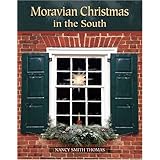
"...the lovefeast remains one of the most cherished traditions of the Moravian Church and one that other non-Moravian churches have instituted in their own congregations. Lovefeasts were special services reserved for significant occasions, like Christmas."

-Nancy Smith Thomas, Moravian Christmas in the South

************************************************************************************

A few years ago I found this little treasure on Amazon after I began searching for more information about the Moravian lovefeast and other traditions of the early Moravians here in North Carolina. I became interested in learning more about it after our church had a lovefeast on a Sunday evening in December. I was intrigued with this beautiful yet simple service of music, Scripture reading, and refreshments. The sweet buns came directly from the Old Salem bakery in Winston-Salem, North Carolina, about a two-hour drive from my home. While I had visited Old Salem two times with school groups, I didn't really focus on the Christmas traditions of the Moravians at that time, so I turned to Amazon.com to find a book that would tell me everything I wanted to know about the beautiful celebration of Christmas in the early settlement.

The first Moravian lovefeast in North Carolina took place in 1753 when a small group of settlers met together to celebrate the birth of Jesus. They held a Bible-based service of music, fellowship, and some simple foods on that Christmas eve so long ago. This tradition remains in many churches today. It all began when the Moravians in Herrnhut, Germany held their first lovefeast in 1727.  The people hung around after the service because they were so moved by the music and readings. A man named Count Zinzendorf  noticed that the people were standing around so he sent for some drink and food so the people could share a meal together. It was how they showed "agape," or Christian love for one another on that Christmas eve.

There are beautiful pictures, photographs, and more in this hardback volume that you can enjoy during this season of celebrating the birth of Jesus, For example, there is a drawing of men bringing in the Yule log, photographs of the many buildings of Old Salem, and recipes for Moravian Sugar Cake and Lovefeast Coffee. You'll enjoy looking at the pictures throughout the book. It makes a good gift for anyone who is a history buff or someone who is interested in Christian traditions at Christmas time. The book was written by Nancy Smith Thomas, a woman who worked at Old Salem Museums & Gardens for 18 years. Through the questions of visitors at the museum, she realized what topics the people were most interested in and she began her in-depth study of the Moravian culture and their celebration of Christmas. This is a wonderful book that I think you will enjoy this time of year.

I finished a great book for my book club this month, The Girls of Atomic City: The Untold Story of the Women Who Helped Win World War II by Denise Kiernan. I must admit that this story is new to me, but it shouldn't be. Somehow I never heard of it in any of my history classes, newspapers, or magazines. But as they say, it's never too late to learn, so here I am learning about an incredible group of people who changed history forever and made people begin to look at warfare in a completely different way. As you may recall, the Manhattan Project began in New York City and was the beginning of the creation of the atomic bomb in America. The project continued in other areas and eventually moved about 75,000 people to Eastern Tennessee (Oak Ridge) to work on things that were so secretive that they didn't even know themselves what they were really doing. Many of the employees at the project were young women from small towns who had never been away from home before. But they were lured by solid pay and the attraction that they were going to do something important for America, so they left their families and even their own children to move to Tennessee. The new employees of Oak Ridge lived in a "pre-fab" town built out of tiny temporary houses and large warehouses. They lived on muddy "streets" and had no indoor plumbing. They weren't allowed to cook their own food and had very little contact with the outside world  They were not allowed to discuss their work with anyone and their letters home were censored and marked up because NO ONE could know anything about the secret project going on in the Appalachian Mountains.


Some of "the Girls of Atomic City" are still alive - they are in their eighties and nineties today. They have given us important information about the events that led up to the atomic bombing of Hiroshima and Nagasaki in WW II. To date, no other cities in the world have experienced a nuclear attack of this magnitude where thousands upon thousands of people were killed instantly. Yet these woman and others knew that they helped to end the war when other attempts to do so were ineffective. This book reminds me of some of the other "surprise" stories that I've read. It reminds me of books such as The Immortal Life of Henrietta Lacks, The Boys in the Boat, Unbroken, and others. I enjoy books about things that really happened in the world, stories that perhaps were not very well-known in the beginning. I think you'll enjoy The Girls of Atomic City, and I look forward to discussing it with my book club.

I'm not sure what I'm going to read next, but I'm sure it will be another good one. Although I've read about 500 books in the past 30 years, I still find hidden gems and learn a lot in the process. I would love to hear your thoughts on today's post, so leave me a note. Your thoughts are always welcomed and appreciated.

Merry Christmas, and have a blessed holy season,

Melissa Hill
Book Blogger
www.onegoodbookblog.blogspot.com

 Product Details

Friday, December 2, 2016

Children's Christmas Books and Other Thoughts


 Product Details

"That day, Jonathan went to the Christmas service with the widow McDowell and Thomas. And that day in the churchyard the village children saw Jonathan throw back his head, showing his eyes as clear blue as an August sky, and laugh. No one ever called him 
Mr. Gloomy again."

From The Christmas Miracle of Jonathan Toomey by Susan Wojciechowski and illustrated by P.J. Lynch.

##################################

The Christmas Miracle of Jonathan Toomey is my favorite Christmas book for children of all ages. It was a gift to our son when he was just 7 years old, and it still holds a special place on my shelf. The book was first published in 1995 when our son was only 4 years old. Benjamin's great-grandfather bought him this book and several others in 1998, but my mom picked out the book and wrote inside the front cover so that we would remember who gave it to our little boy. It is a truly beautiful book. It comes with a CD reading so that you can just sit back and enjoy the story of hope, love, joy, and miracles.
One thing that sets this book apart from other children's book is the beautiful illustrations by Lynch, The pictures are so beautiful that you just want to tarry on each page.

The main character of the book is Jonathan Toomey, a sad woodcarver who has been very depressed since the death of his wife and baby. Everyone in the village knows him as a gloomy person who keeps to himself. One day his life slowly begins to change when a widow and her son, Thomas, knock on his door They ask him to carve a nativity set because they lost their set in their recent move. They ask Toomey to complete the set in time for Christmas, but he doesn't make any promises. The three people begin to get acquainted over time, and the heart of Toomey begins to change. As he carefully carves each person and animal who were at the First Christmas, he begins to feel love and joy in his heart. He actually made his Joseph figure to look serious and caring, he made Mary look humble and full of love, and he carved Baby Jesus as a smiling infant who reached up to touch his mother's face. As Mrs. McDowell and Thomas began to visit the woodcarver regularly, his heart slowly changed from a hardened, sad, lonely heart to a person who could enjoy life again. He completed the set by Christmas morning, attended the Christmas service with his new friends, and he felt pure joy for the first time in a very long time. It was truly a Christmas miracle. 

This book reminds me that there is always hope, no matter what you're going through. Miracles still happen today, so we shouldn't give up. Many of us are going through some hard times right now, and life is tough. But if there was hope for Jonathan Toomey, there is surely hope for all of us. Personally, I see this as a spiritual transformation in the life of the woodcarver, and I believe that the Baby Jesus is the place we should be looking for our joy, hope, and love.

There are some other Christmas books for children that I would like to recommend. I've enjoyed The Best Christmas Pageant Ever, 'Twas the Night Before Christmas, Small One, The Legend of the Candy Cane, Christmas in the Big Woods, and The Polar Express.  For adults I recommend Skipping Christmas, The Christmas Train, and The Best Christmas Pageant Ever. Some of these books are secular-based, while others are focused more on the spiritual meaning of Christmas. I'd love to know if you've read some of these and how you felt about them. I think my adult personal favorite is Christmas Train. Have you read any of these? If so, which ones are your favorites?

In the past month I read Lilac Girls: A Novel and Thomas Jefferson Dreams of Sally Hemmings. Both were amazing books. We had some good discussion at our book club about Lilac Girls which made it more fun for me. The details in this historical novel are right on point. If you look at other websites you will find the historical background of Lilac Girls to be very accurate. Martha Hall Kelly, the author, did a TON of research in order to write this novel based on the lives of women during WW II, most of whom lived in Europe. 

I'm currently reading The Girls of Atomic City: The Untold Story of the Women Who Helped Win World War II by Denise Kiernan. It's the current book for our club. This is a true story about men and women who were hired to do some sort of secret work in East Tennessee during the war, and their pay was very good. I haven't read enough of the book to make a lot of comments about it, but I'm enjoying it a lot. It was published in 2013 and has been a New York Times Bestseller. I enjoy books about events in our history that somehow were never our radars so we are just now learning about them. There are so, so many great books such as The Boys in the Boat, Unbroken, The Hiding Place, and The Great Bridge: The Epic Story of the Building of the Brooklyn Bridge that inspire us through true events that happened around the world. I'm just now sort of discovering some of these gems that are true stories about extraordinary people who made a difference in the world. Historical novels are great as well. Getting back to The Girls of Atomic City...I've never heard of this story before, so it's a totally new event in history to me. I'm looking forward to reading the rest of it.

I hope you have a peaceful weekend,

Melissa Hill
Book Blogger
www.onegoodbookblog.blogspot.com