Friday, October 28, 2016

The Stars of "Fixer Upper"


Product Details

"We both hope, with all of our hearts, that the people who read this book and watch our show and come to see what we're working on in Waco will take a chance to go after their dreams too. Because the key to everything Chip and  I have learned in our life together so far seems to be pretty simple: Go and find what it is that 
inspires you, go and find what it is that you love, and 
go do that until it hurts."

-Chip & Joanna Gaines, p. 82 in The Magnolia Story

################################################################################### 

 Have you watched HGTV lately? What's your favorite show on that channel? Chances are, you're saying "Fixer Upper," the relatively new show that stars Chip and Joanna Gaines of Waco. The basis of this show is that they take a family who wants to fix up a house, and they help them find the house and help them through the process of renovations. Chip's expertise is the building aspect of the house, and Joanna's strength is in her design ideas. They couple works together in a fun, creative way that makes the show enjoyable and unique. At the end of each episode there is a big reveal and the audience gets to see the finished product. But what makes this show any different than the others? Well, I think it's several things. For one, Joanna has a knack for finding old things and finding a new purpose for them. She's not afraid to use a lot of shiplap and subway tile, and she's not afraid to put three-dimensional objects on the walls. I have watched this show many, many times, and I've come to appreciate Joanna's design techniques, especially the way she custom-designs each house for a new family, keeping in mind their lifestyle and family size. She wants her homes to look warm, inviting, and usable, not showy or uncomfortable. And I appreciate the way she uses the work of local craftsmen, people such as artists and her furniture-maker. She loves things that are handmade, and she enjoys giving work to local people who are very talented in their own ways. I love what they say at the end of each episode. It's something like "Welcome home. We hope you live happily ever after here." 

The book, The Magnolia Story, is written by Chip & Joanna, and it's co-written by Mark Dagostino, an experienced co-author who has worked for The New York Times and People magazine. In the book we learn a little bit about the background of Chip and Joanna. We learn that they both came from very loving and supportive families, but their personalities are very different. Both Chip and Joanna graduated from Baylor University, but Chip's major was Marketing, and Joanna's major was Communications. Chip is outgoing, funny, and a hard worker, and Joanna is more of a quiet introvert. It seems that in this case, opposites do attract, and they fell in love. Chip was involved in small business pursuits from a young age, but Joanna really had no background in it. She did work for her dad's tire company for several years when she was in college, but she didn't have experience in business, or home decorating for that matter. Chip was already a business owner when he met Joanna, and they soon began to talk about their dreams and aspirations. Joanna began to define her design interests by experimenting in her own homes, and then things just sort of evolved. Things weren't always perfect for the couple, but they worked hard and were committed to always treating others the right way, especially their employees. They live a life of faith in God, and at the end of the book, they give the reader more advice: "Don't quit, and don't give up. The reward is jut around the corner. And in times of doubt or times of joy, listen for that still, small voice. Know that God has been there from the beginning - and he will be there until...The End." I love how they give God the glory for helping them reach their dreams, and they aren't ashamed to say it. I'm sure they are raising their four children to reach for their dreams as well. There's so much more in this little book, so I encourage you to read it. I couldn't put it down.

This week my book club discussed the book, American Pastoral, by Philip Roth. Our group is small, and very few people enjoyed the book. I forced myself to keep reading it early on, and after a while I was sort of drawn into it and enjoyed it. There's a lot going on in this book, so if you're tired and worn out, you may not want to start a book like this. Speaking of my book club, we need some suggestions for our book club! PLEASE send me some ideas. The deal is that we're trying NOT to spend money on books, so we've been reading book club books from the library so far. Our next book is Lilac Girls: A Novel by Martha Hall Kelly. It sounds like a pretty good book but I haven't been able to get a copy of it yet. I'm waiting for the library to call me to tell me that the sound recording of the book is ready for me to pick up, so that's how I'll read it. The hard copies were all checked out by our group, but I don't mind a sound recording anyway. I almost always have a book to listen to in the car. 

So what else is new...let's see...our son if working on a Master's Degree in Creative Writing at Brunel University in West London. The program takes a year. He's having a good experience and is even taking Japanese on the side. He recently went to Central London to visit the Hillsong Church and had a great worship time. He's looking for a part-time job in sound, film, or music, so if you know of anything there in London, let me know. He recently went to Central London to a networking event and has a few leads. We're looking forward to visiting him in England next summer. Also...a few weeks ago we had our annual Hispanic Heritage Night at the elementary school where I teach ESL. We had a HUGE turnout for the program and potluck meal. Our students sang, danced, and more, and it was a great night. We got responses stating that about 500 people were coming, but I don't know what the final count was. This is my eleventh year at this school, and the tenth Hispanic Heritage Night that I have helped with. Coming up soon is our Technology Night for Hispanic parents where we plan to give them some educational websites that they can use at home with their children.

Have a wonderful weekend! It's going to be warm and sunny here all weekend. You can't beat the weather here in North Carolina in the Fall.

Blessings,

Melissa Hill
Book Blogger
www.onegoodbookblog.blogspot.com

 
I love my new globe collection! Thanks, Mom!

Monday, October 17, 2016

You're Never too Old

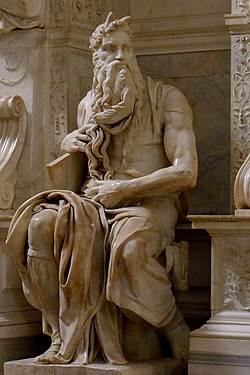
Michealangelo's Statue of Moses in the San Pietro in Vincolin Church, Italy


"Many believe - and I believe - that I have been designated for this work by God. In spite of my old age, I do not want to give it up; I work out of love for God and I put all my hope in Him."

-Michelangelo
(www.brainyquotes.com)   

*********************************************************

I read an article in yesterday's Sunday newspaper insert about David McCullough, one of my favorite historians. I've read three books by McCullough and I enjoyed them all, but completing one of his books is no small feat! I've read his books The Greater Journey: Americans in Paris, John Adams, and The Wright Brothers. I cannot imagine the amount of research and patience that it took to complete these books, but this man clearly enjoys his work or he would not still be writing books at the age of 83. And get this - I read that he has a new book coming out in 2018, The Pioneers, about the settling of the west. Now that's an optimistic man, a man who is still vibrant, curious, and productive in his 80s. I can't wait to read his book in 2018 when he is about 85 years old. Michelangelo was also productive and vowed not to give up due to his age, and I applaud him for this positive attitude.

In the past few weeks I've been on the road a lot, so I had plenty of time to listen to two books on CD. I listened to The Old Man and the Sea by Hemingway, and The Worst Thing I've Done by Ursula Hegi (my latest favorite author). I enjoyed listening to Hemingway's book although I read it many years ago. It was good to be able to hear an excellent reader do the hard work for me, but I admit that I don't get all of the symbolism. Still, it's a classic that everyone should read at some point, and it's very short. Hegi's book, The Worst Thing I've Done, is about three childhood friends who grow up and face difficulties in their relationship. Annie, Jake, and Mason have been friends for all of their lives, and Annie and Mason eventually get married. Tragedy strikes and Annie's parents die in a car crash on the night of her wedding, so Annie and Mason decide to raise Annie's infant sister who was in utero at the time of the accident. Honestly, I didn't enjoy this book. It was a disappointment after reading Hegi's two excellent books, Stones From the River and The Vision of Emma Blau. I loved these two books by the German American author, and I appreciated the way she intertwined the two books by having some overlapping characters such as Trudy. But The Worst Thing I've Done was a total flop for me.

I finished reading American Pastoral by Philip Roth yesterday. I enjoyed this book but I was unfamiliar with Roth. This book won a Pulitzer Prize, and it doesn't surprise me. It's been around for a while, and someone told me that it's considered to be a classic. It was published in 1997, so it's not new, but it's a former bestseller and prize winner, so I encourage you to read it. The book is divided into sections: Part I is "Paradise Remembered," Part II is "The Fall," and Part III is "Paradise Lost." It's a fairly long book of of over 400 pages, but it's addictive and so well-written that you will enjoy the ride. The titles of the three sections brought to mind the course that I took in college, "John Milton," which was taught by Dr. Stephen May to upper-level English majors at Georgetown College. It reminds me of Milton's "Paradise Lost," of course, although most of the details have become a blur in my mind. Anyway, American Pastoral is about a man known as "The Swede," a hometown hero in Newark, New Jersey. He was the star athlete in his high school and the most popular person in town. He great up, married a former Miss New Jersey, inherited his father's prosperous glove factory, and moved in to a beautiful home. But one day all of his great fortune came to a screeching halt when his only child, Merry, got into some serious trouble and the Swede's life changed forever. I found myself sympathizing with most of the characters in this story even though none of them were perfect by any means. Read this book to find out what happened to Merry and think about the difficult decision that her father must make. His "perfect" life fell apart and having not dealt with this type of thing before, he faced a dilemma.

I recounted the books that I've read since 1984 today. I have read 473 books in about 32 years. That comes to an average of about 15 books per year, although there were years when I didn't have much time to read (i.e. raising kids, etc.). As I looked through my card catalogs I thought about a couple of topics that I could cover in future posts, so stay tuned. Next time I'll share some of the funniest books that I've read in the past 32 years, so if you need something funny to read, that will be the post for you

Have a great week and enjoy this beautiful fall weather.

Melissa Hill
Book Blogger
www.onegoodbookblog.blogspot.com 

  
The Evans Farm near Georgetown, Kentucky. Beautiful!

Monday, September 26, 2016

Thoughts to Consider


 Product Details

"There is nothing to writing. All you do is sit down at a typewriter and bleed."

-Ernest Hemingway, Ernest Hemingway Quotes
********************************************************

Hemingway did say something significant when he said that writing is like bleeding. Of course, most of us use computers today, not typewriters, but the sentiment remains the same. Writing makes one feel vulnerable and exposed as if we are preparing for someone to disagree with our words in the very next moment. Even this carefree blog can make me feel like that, but at my age, I already have offended so many people,  I assume, that it doesn't bother me at all to think that someone might have a different opinion than mine. So, feel free to leave your comments on my blogs, knowing that I will not think differently about you than I do at this current time.

So, what have I been reading? Well, I think I read four books in the past month, and I wrote about most of them last week As you know, I've been on an Ursula Hegi kick lately, and I've enjoyed her books immensely. As a matter of fact, I can't think of an author that I've enjoyed more in the last few years. I tried to send her an email but I couldn't find an email address for her. Often I'll try to contact an author that I enjoyed, always in the hopes of receiving an answer. I've been pleasantly surprised most of the time as I've gotten responses from Mildred Kalish, Jennifer Coburn, and Connie Gantz. I also received a form letter from Barbara Kingsolver a few years ago, as I mentioned before, but her signature was done with her own hand. I was just happy to get a response from her as she is one of my most admired authors.  Some other well-known authors who I've met for their autographs are Jimmy Carter, Frank McCourt, Dr. Paul Austin, and Rabbi Harold Kushner. I treasure the opportunities that I had to see these writers and to learn more about their lives.

I'm currently reading A Farewell to Arms by Ernest Hemingway (1929).  I have been known to reach for the classics time and again, and I'm enjoying this one so far. Other classics that I've read are Moby Dick, Huckleberry Finn, Uncle Tom's Cabin, Anna Karenina, The Old Man and the Sea, A Prayer for Owen Meany, Great Expectations, The Grapes of Wrath, Pride and Prejudice, The Catcher and the Rye, and others. I've enjoyed most of the classics, and reading them has helped me play "Jeopardy" at home. Now back to Hemingway...he wrote nearly two dozen books, and many of them won prizes and are read by many high school and college students today. The author died in 1961, but I don't believe his writings will be replaced on the list of "Greats" for a long time. If you're interested in the early writing career of Hemingway, you might like to read McLain's book from 2011, The Paris Wife. The book sheds light on the early writing struggles that the author faced as well as his relationship with his first wife, Hadley Richardson. They knew each other for less than a year when they moved to Paris to begin a new life. They later had a son, Jack, as Hemingway battled his inner demons and struggles to make a living as an author.

As for A Farewell to Arms, I haven't read enough of it to give an accurate review of the book, so I'll save that for next time. If you have never seen the movie, "Midnight in Paris," I highly recommend it. It's a fun story of a man in Paris who sees famous writers and artists from the past every night. He meets Hemingway, Gertrude Stein, Picasso, and others. I know I've mentioned this movie before, but it seemed appropriate to repeat myself here. Tomorrow night I meet with my new book club, so I'll have plenty of material to discuss in my next post.

This weekend I found a good movie at Red Box. The movie is "Genius," the story of Thomas Wolfe and his editor at Scribner, Maxwell Perkins.  The movie is a new release so look for it. Wolfe is played by Jude Law, and Perkins is played by Colin Firth. The movie gives us insight into the struggles that many authors face in order to produce a truly great novel. Wolfe's most famous book was Look Homeward, Angel and when he first presented the manuscript to Perkins, it was WAY too long. The book was successful from the beginning, and Wolfe was elated. We've been to the Wolfe Home in downtown Asheville right here in North Carolina, so I was familiar with him. We also visited his grave there a few years ago. Incidentally, Asheville is about 3 1/2 hours from us here in Durham, so it makes for a great weekend trip. You might also be interested to know that the former farm of Carl Sandburg is near Asheville and can be toured. Sandburg was once the poet laureate for our state. His wife was known for raising her prize-winning goats.

And that's about all for today, friends and family. Thanks so much for reading. I appreciate your time and look forward to sharing some additional thoughts about great books, movies, and just about anything else that I think is interesting.

Happy Fall,

Melissa Hill
Book Blogger
Teacher of English as a Second Language
www.onegoodbookblog.blogspot.com


Monday, September 12, 2016

FOUND: A Precious Gem in the Hegi Books

"Books don't change people; paragraphs do, 
sometimes even sentences."

-John Piper in A Godward Life


Do you believe that words can change you? I do. I've seen the evidence in my own life. Words can show you a different side to a problem. They can inspire you and move you to take action when you needed a little nudge to get you going. Words provide beauty and art and remind you that this is indeed a "beautiful world." Similarly, words can destroy. They lead to war, hate, anger, solitude and indifference. Think about what Piper is saying in the above quote...for such a short sentence, it does dig deep into our thoughts if we let it.


Product DetailsProduct Details


 I found a gem in two great historical novels recently, the books of German American writer Ursula Hegi. In the past month I read her books, Stones From the River  and The Vision of Emma Blau. Both are historical novels set around the time of WW II, and they are epics in that they span large amounts of time and are full of twists and turns. I enjoyed these books more than any others that I've read this year so I highly recommend them. Stones From the River is a novel about a Dwarf girl named Trudi who was born into a loving home in Borgdolf, Germany, but her mother couldn't handle the fact that Trudi was different. Eventually this led to her suicide, so Trudi and her father, Leo Montag, were left alone to live above the Pay Library that they ran and operated as their sole income. Many of the people in the small German village wondered what caused Trudi's dwarfism, but they eventually came to accept her. In this book we see that Trudi longs for what most people want, to be treated normally in all things, even in love. She is a strong, lovable character who always believes in kindness and love, but she isn't perfect. She faces the same struggles that all of us face, so she is genuine and believable.

 Throughout this tale we meet many characters in Trudi's life, people like the butcher, Max, Georgg, and Eva. These people live before, during, and after the reign of Adolph Hitler, so their lives change drastically. They didn't have much to eat during Hitler's reign, and they lived in fear of being arrested if they said the wrong thing. Trudi and her father eventually hid a Jewish mother and her son, even though were very afraid of what could happen to them. Read this book to find out what happens to Leo and Trudi..you will definitely be glad you did so. I couldn't put this book down. No wonder it made it onto Oprah's list of great books!

I enjoyed The Vision of Emma Blau just as much. This book chronicles the life of the German immigrant to the U.S., Stefan Blau. He left Germany when he was a young teenager to seek a better life for himself. He began working in the kitchen of restaurants and eventually built a castle-like building in New Hampshire that he called The Wasserburg ("water fortress"). The building held apartments and a restaurant, and Stefan rose to be known as one of the most successful men in town. He had three wives, the first two having died in childbirth, and he fathered three children. He was married to Helene the longest, his third wife, and they worked hard to see that The Wasserburg continued to be successful. We don't meet Emma Blau until the later third of the book, which I found interesting, since her name is in the title of the book. She is the granddaughter of Stefan and Helene Blau, and she is the final caretaker of The Wasserburg. The story begins in approximately 1900 and continues well into the 1980's, so I also consider it to be an epic, but it's also an epic in that there are so many characters and conflicts throughout.  Throughout the plot we learn of Stefan's struggles to become successful and also to be treated like an American. He and his family are sometimes made fun of because they are from Germany, a country that began to be seen as evil due to Hitler's horrors.
This book is great because Hegi knows how to write about several generations in a careful and smooth manner, and her language is beautiful. The book flows so easily that, once again, you won't want to put it down. The Vision of Emma Blau is a tale about hard work, perseverance, jealousy, happiness, love, and family dynamics. While reading this book you will realize that it bridges to Stones From the River in that some of the characters are the same. For example, Helene's brother is Leo Montag, Trudi's father, from the first book. When I read this I was glad to learn more about the characters that I liked so much.

We saw a movie this weekend, Tom Hanks' new film, "Sully." We wanted to see it because it's based on a true story and because we like Tom Hanks so much. The movie is only about 1 1/2 hours long, and it basically only has one conflict in it, so I wouldn't call it a great movie. Still, I'm glad I saw it because I learned about some of the things that were going on behind the scenes in Sully's life, things that I wasn't aware of. Our young adult son pointed out that most of the people watching the movie with us were "seniors," so I'm not sure it will appeal to the younger crowd.

I read Faithful Place for my book club in ten days, and it was pretty good, but I wouldn't put it in the same category as Hegi's books. Faithful Place is a murder-mystery set in Ireland, so if you enjoy mysteries you might like this book. By the way, if you are one of my new readers you may not be aware of my "top five" books, so here is a list that I consider to be great books:

Novels:

1. The Poisonwood Bible
2. Edgar Sawtelle
3. Cutting for Stone
4. A Prayer for Owen Meany
5. The Kite Runner

Nonfiction:

 1. An Hour Before Daylight (Jimmy Carter)
2. The Prize Winner of Defiance, Ohio: How y Mom Raised 10 ids on 25 Words or Less
3. Little Heathens
4. The Diary of a Young Girl (Anne Frank)
5. Angela's Ashes, 'Tis, and Teacher Man by McCourt 


Tuesday, August 16, 2016

A Fun Movie...and a good book, A Memory of Violets


"In writing A Memory of Violets, I was constantly struck by the cruel contradictions of the lives of the flower sellers. Here were some of the poorest women and children in society, living the harshest of existences, and yet every day they were surrounded by the beauty of the flower markets. Black -and-white images and shaky newsreel footage taken during the late nineteenth and early twentieth centuries give a fascinating glimpse into market life in London, but it is difficult for us to imagine what these scenes would have looked like in full color. Oddly beautiful, perhaps."

Product Details

-Hazel Gaynor, author of A Memory of Violets and four other novels
__________________________________________________________________________________

This afternoon I finished reading this novel by Gaynor, a sweet story that I think will encourage your heart as it tells the story of some incredibly strong characters who endured hard times in England beginning in the year 1876. The central character is Tilly, a young woman who leaves her home in Grasmere in the the Lake District to become a sort of "dorm mother" to girls in a special school in the city of London. The school is the Training Home for Watercress and Flower Girls, a place where blind and crippled girls can live under close supervision as they learn how to make beautiful artificial flowers of all kinds to be sold. When twenty-one-year-old Tilly settles into her new room in the home for the flower girls, she soon finds a box with some curious items in it as well as a notebook that was written by someone named Florie. She begins to read the notebook and thus she unravels a story from the past that intrigued her. The girl who wrote the journal, Florie, wrote a lot about her little sister that she lost while trying to sell flowers in a crowded part of London. The two girls were utterly alone, so they had no one to ask for help. The younger sister, Rosie, ended up being adopted by a wealthy couple who learned to love her deeply. When they first found her they didn't know that she was almost completely blind, but after years of surgeries and treatments, her vision returned. Nevertheless, after the day that the girls were accidentally separated, they never saw each other alive again.

Meanwhile, Tilly, the main character, begins to love her new home. She becomes close with the twelve girl under her guidance, and they begin to form a close relationship. Tilly keeps reading the journal and eventually is able to solve the mystery of what happened to the two orphan girls who were once considered to be filthy street urchins. It does have a happy ending but, of course, I won't reveal it here. I think you'll enjoy this story of love, relationships, and perseverance. Gaynor has a lovely way with words, so it's easy reading that won't take you long to finish. I read it in about a week. Again, this book falls into my recent favorite category of historical fiction, a story based in a time of English history when there were many, many impoverished children living on the streets of London. Gaynor researched extensively before she began the book. She discovered some information by Henry Mayhew, a social researcher, who had interviewed many of the London street sellers. She also read the book London Labour and the London Poor and realized that it was the story of the flower sellers that she wanted to tell. So she began to write. I have been to Grasmere and London, two of the settings that are used in the book, so reading this book was especially interesting to me. It seems like I've been reading a lot of books set in WW II in Europe, but this one varies in that it doesn't focus on war between countries. Instead, it is about poor children in London who find a way to have a happy and productive life.

Alright...now on to the topic of MOVIES. Every ow and then I talk about a good movie that I've seen so this is definitely a good movie: "Florence Foster Jenkins," the new movie starring Meryl Streep and Hugh Grant. We went to see it last weekend and we were not disappointed. Anything with Meryl Streep in it is going to be good, so this one is a winner as well. Streep plays the role of Florence Foster Jenkins, a lover of music who lives in New York and owns a music club. She is a wealthy woman who is married to St. Clair, the character played by Grant, a man who is completely devoted to her in every way. St. Clair does everything he can to make Florence believe that she is a great opera singer although she is TERRIBLE at singing. Everyone laughs at her while her husband makes excuses for their rude behavior. He pays her pianist (played by Simon Helberg from "Big Bang Theory") very handsomely to act as if he believes Florence's music is beautiful. He also pays her singing coach to encourage her in her quest to become an opera singer. It's a funny story and I admit that I actually laughed out loud at times, but it's also very sweet. It's sweet because Florence's husband is so devoted to her and wants, more than anything, to make her happy as she strives to make her dream come true. You see, since the age of 18 she suffered from syphilis and it affected her life for the rest of her days. This caused St. Claire to feel all the more devoted and sympathetic to her. So, it's true that Florence was clueless as to how to hit the right notes, but she was a very lovable character who was kind to others and just wanted to be able to enjoy her music to the fullest.

 Florence Foster Jenkins (film).jpg

I hope you're having a good week. A penny for your thoughts...or should I say a sixpence for your thoughts??

-Melissa Hill
Book Blogger
E.S.L. Teacher
www.onegoodbookblog.blogspot.com


Thursday, August 11, 2016

France and World War II

"It is not tolerable, it is not possible, that from so much death, so much sacrifice and ruin, so much heroism, a greater and better humanity shall not emerge."

-Charles de Gaulle, as quoted on azquotes.com. Charles de Gaulle was a French military general and statesman. He was the leader of Free France (1940-1944) and the head of the Provisional Government of the French Republic (1944-1946).

###################################################################################
Irene Nemirovsky, author of Suite Francaise, who died at Auschwitz at the age of 39.

 Yesterday I finished a good historical novel that I came upon while browsing at Costco. I was at the store for another reason, but I decided just to look at the books to see if there was anything that interested me. Well, I found a true gem, and I didn't even realize the full extent of the importance of it until I read about the author when I was near the end of the book. Irene Nemirovsky was a novelist of Ukrainian Jewish birth who spent more than half of her life in France. She was denied citizenship but considered herself to be French. Her experiences did, no doubt, shape this novel about how France was affected by the Germans during WW II. She and her husband were forced to wear the yellow star, and soon thereafter they were taken to Auschwitz at separate times. Nemirovsky's husband was immediately taken to the gas chambers but she lived in the camp for a month before she died of typhous. Their two daughters managed to hide and to live on thanks to the help of many people who kept them safe. Nemirovsky's novel was hidden and unknown for sixty-four years, and it depicts the troubled times during the Nazi occupation in the 1940s when the German soldiers and Frenchmen had to coexist during a time when all of Europe was at war. The fact that this novel was hidden for so many years reminds me of Harper Lee's first novel, Go Set a Watchman, the first novel that she submitted to her publisher in the mid-1950s. Supposedly this novel was not discovered until 2014, so although it was submitted first, it was published many years after To Kill a Mockingbird and near the time of Harper Lee's death. 

You may have noticed that in the past couple of years I've had an interest in France and World War II. Perhaps it's because I visited France for the first time just four years ago and I saw the monument in honor of all of the Jews of France who perished during WW II.  This monument is near the front entrance to Notre Dame, and there is a light for every Jew who died. You cannot visit this monument and wonder about how the war affected so many innocent people all across Europe. As I chase a rabbit, this also reminds me of the monument in Edinburgh, Scotland that is a tribute to all of the Scots who died in the American Civil War. There is a large statue of Abraham Lincoln at this monument, and it made me realize that many of the soldiers in our own war were immigrants from places like Scotland. Experiences like these remind us that we do not live in a bubble; we are not the only ones affected by wars and other troubled times.

Nemirovsky experienced much of the WW II turmoil first-hand, and so this is the back-drop for her novel, Suite Francaise, translated by Sandra Smith. In this book we meet people such as the Pericand family, the Michauds, Charles Langelet, the Angelliers, Bruno, and others. The Germans move in and occupy France, and the French are forced to allow soldiers to sleep in their homes.So they must watch their every move so that they don't anger the Germans, and they count their possessions to make sure they don't steal anything. While some of the German soldiers were kind to their hosts, many were not and tore up the French homes. While the French did not like to have a soldier billeting in their homes, some of the soldiers would give small gifts to the family. They were always desperate for enough food and other necessities.  But there was always great tension as the two groups had to learn to get along. The soldiers claimed that they were only following orders, so they had to stay where they were assigned. In the end, the soldiers in the small town receive their orders that they are going to Russia, so the townspeople are, for the most part, happy that their enemies have left.

I bought another book at Costco last night, although I generally do not buy books. I had a "weak moment" and bought  book by Hazel Gaynor called A Memory of Violets. It's set in London, so I'm following the tendencies to read books set in Europe. I look forward to starting this book soon.

I finished listening to two books in the car recently. I read What On Earth Have I Done? by Robert Fulghum and Noah's Compass by Anne Tyler. Fulghum's book is a collection of essays and Tyler's book is about a 60-year old single man named Liam who tries to redefine himself after he is laid off from his teaching job. Fulghum's book was enjoyable to listen to because of the personal stories and anecdotes, and I would say the story line of Noah's Compass  is unremarkable yet somewhat unpredictable. Next time I'll share my thoughts about a movie that I plan to see, Meryl Streep's new film, "Florence Foster Jenkins." I plan to see it this weekend. It sounds like a fun story, and I can't pass up the chance to see a movie by the great Meryl Streep.

After my closing today I'll add some additional photos of my trip to Helen Keller's home and the hometown of Harper Lee. Summer break is soon to come to an end for me, but I think I'm ready for it. Next Friday, August 19, is the first teacher workday for our district. The first day for students is Monday, August 29. Then after one week of teaching we will get our Labor Day weekend! Try to stay cool and let me know your thoughts on the books I'm reading.

-Melissa Hill
Book Blogger
www.onegoodbookblog.blogspot.com

Monroeville, Alabama, hometown of Harper Lee


Gardens of Helen Keller's home, Ivy Green, in Tuscumbia, Alabama

A braille typewriter used by Helen Keller


Thursday, August 4, 2016

Two Books and Bad Moms

"Books serve to show a man that those original thoughts of his aren't very new after all." 

-Abraham Lincoln

(as quoted by www.skipprichard.com; photo taken by Scottish photographer, Alexander Gardner (1821-1882), as shared at www.commons.m.wikimedia.org)
 *********************************************************************************************************

 I think Abraham Lincoln had a good point...is there anything that is really original anymore? I can find out almost anything by googling these days. It reminds me that many other people have already thought about my question and have tried to find a good answer. They've mulled over the topic and used their own resourcefulness to find an answer. But nothing is really "original" these days. Still, I can try to write, draw, dance, think, perform, read, and watch as I so choose, because it's very unlikely that there is anyone else who has done these things EXACTLY like I have done them.

I listened to two books in the car recently and I enjoyed them. The first one is a book by Dave Eggers, Your fathers, where are they? And the prophets, do they live forever?
This is a strange little book about a young man who kidnaps the people in his life who he feels have wronged him in various ways. It's his tenuous attempt to make sense of his life, a life that he feels has been imbalanced and broken. He kidnaps an astronaut, a teacher,  his mother, a police officer, and a young woman.  He locks them in individual rooms in a large empty building complex near the ocean. He questions each one to try to understand why they did such mean things to him in the past. He is clearly angry at each one of them, and he takes the opportunity to tell them how they have wronged him. Each person reminds Kevin that the authorities will find him and put him jail for what he has done to him/her, but he doesn't seem to care. He continues to question each one because he wants to make sense of his life. This book is a little too weird for me, but the sentiment behind it is understandable. I think every human longs to live a life that "makes sense" and is at peace, but in order to do this we would have to live in a perfect world. How many of us have never looked back into our past and asked, "Why did __________ do that? Why did ________ make me feel bad?"

The second book that I listened to recently is What On Earth Have I Done? by Robert Fulghum. You may remember that Fulghum is the author of the popular book, All I Really Need to Know I Learned in Kindergarten. What On Earth Have I Done? is a collection of essays in which Fulghum discusses all sorts of topics. He shares his likes and dislikes, the interesting people that he has met, and more. He calls himself a "storyteller," someone who enjoys writing about his experiences and thoughts. He relates many of his experiences from the years that he spent on an island in Greece.  Of course, he met a lot of interesting people there and he learned a lot from them. If you'd like to read something that is thoughtful and enjoyable, you will enjoy this book of essays.

I'm currently listening to an Anne Tyler book, Noah's Compass. It's about a man who is beaten and robbed during the night, but he has no memory of the attack. So far it's a pretty interesting story but I'll write more next time. Apparently I read this book in 2010, so this is my second time around, but I'm enjoying it. I've read three books by Anne Tyler so far.

Now about "bad moms." I'm sure you've heard about the new movie, "Bad Moms," starring Mila Kunis, Kristen Bell, and others. I went to see this movie one discount day at Wynnsong because I thought it would be funny. Granted, it did have a lot of funny parts, but it was pretty vulgar as well. It's a Rated R movie for a reason, so if you don't like bad language, etc., just stay home. But it does bring up some good points about motherhood, the fact that we may often feel unappreciated and just plain tired. Yet we trod onward out of unconditional love for our families. The moms depicted in the movie are far from perfect, but what parent really is? We do the best that we can and put others ahead of ourselves. The three main characters in "Bad Moms" hit rock bottom and said, "NO MORE! We will no longer do everything for our families. We will take time for ourselves!" As you can imagine, there are many funny scenes, but it is pretty raunchy so think before you run out and see this flick. This movie makes me glad that the P.T.A. president doesn't really have this much power! In the movie, she abuses her power and controls everything that goes on at the school. It makes for a pretty funny series of events.

I'll close with some additional pictures of my recent trip to Alabama where I visited the home of Helen Keller and the hometown of Harper Lee. Have a great weekend!

-Melissa Hill
Book Blogger
www.onegoodbookblog.blogspot.com 

I'm reading To Kill a Mockingbird in Monroeville, Alabama.
 
Ivy Green, home of Helen Keller, in Tuscumbia, Alabama
The cottage where Anne Sullivan and Helen once lived and worked.